Stand in the middle of almost any warehouse and look up.
Chances are, whatever’s stored on the top few shelves has been sitting there longer than it should, not because nobody needs it, but because nobody’s found an easy, safe way to reach it.
Ask around, and you’ll probably hear the same quiet workaround: someone climbs a ladder, someone waits for a full pallet to come down just to grab one box.
It doesn’t have to be that way. Racking gets built tall because floor space runs out fast and land is expensive, so businesses do the sensible thing and go up. What nobody quite plans for is the moment staff realise that reaching the top of it safely, without a ladder in one hand and a box in the other, is a completely different problem to solve.
That’s where the order picker forklift comes in, and once you see what it actually does, it’s hard to look at a tall racking system the same way again.
Meet the Machine That Goes Up, Not Just Along
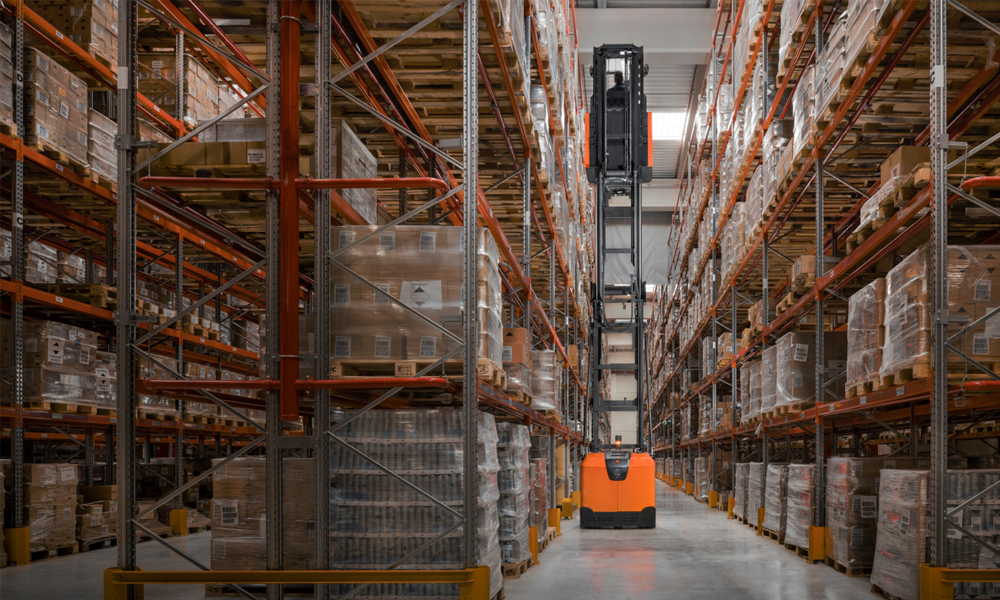
Picture a standard forklift, and you’re picturing a machine built for one job: carrying a pallet from one spot on the ground to another. An order picker was designed to solve a completely different problem. Instead of moving the load, it moves the person, lifting the operator up on a small platform so they can reach directly into racking and pull exactly what’s needed, one item at a time, from wherever it happens to be stored.
That single shift, moving the human instead of just the pallet, changes almost everything about how picking actually works:
- Individual items get picked directly from the shelf, no pallet has to come all the way down first
- Aisles can run narrower, since the machine is built to manoeuvre in tighter spaces than a standard forklift ever could
- Height stops being a limitation, with platforms reaching several metres up without a ladder in sight
- Picking becomes precise rather than approximate, built around grabbing exactly what an order calls for
It’s less a forklift in the traditional sense and more a mobile, elevated workstation, one that happens to solve the exact problem tall racking creates.
Also Read: The True Cost of Owning a Forklift Over 5 Years
The Warehouse That’s Ready for One (Even If It Doesn’t Know It Yet)
Some warehouses need an order picker and simply haven’t realised it yet, because the signs tend to look like ordinary, everyday friction rather than an obvious gap in the fleet. A few of the clearest ones to watch for:
- Staff climbing ladders to reach the top shelf for a single item
- Full pallets being lowered and unwrapped just to fill one small order
- Narrow aisles designed to save floor space, but nothing on the market actually fits down them comfortably
- High volumes of small, specific orders, common in e-commerce fulfilment, retail replenishment, and wholesale distribution, where dozens of orders need picking every day rather than a handful of full pallet loads
Recognise even one of these in your own warehouse, and there’s a good chance an order picker isn’t a nice to have. It’s the missing piece that turns wasted vertical space into genuinely useful storage.
What Actually Changes Once One’s on the Floor
The shift tends to show up fast, and it shows up in ways that go beyond simply “picking is quicker now”:
- Vertical space stops being dead weight. Racking that used to sit half-empty because nobody could reach it comfortably suddenly becomes fully usable.
- Picking accuracy tends to improve. An operator working directly at shelf height, rather than squinting up from the ground, is simply better placed to grab the right item the first time.
- Aisles finally make sense. Narrow layouts that once felt like wasted design decisions start earning their keep, because a machine finally exists that can actually move through them.
- The picking job itself feels better. Working from a stable, purpose-built platform tends to feel considerably better than balancing on a ladder with a box under one arm.
Not All Order Pickers Look the Same
Once a warehouse decides it needs one, the next question is usually which one, since order pickers come in a few distinct configurations built for different heights and different jobs.
- Low-level order pickers lift the operator just far enough off the ground to reach the lower and middle levels of racking, ideal for warehouses where most picking happens within easy arm’s reach and speed matters more than height.
- Medium-level order pickers extend that reach further, suited to racking that climbs a few levels higher without quite needing the full vertical range of a high-level machine.
- High-level order pickers are built for serious height, reaching well up into tall racking systems, the kind found in large-scale distribution centres where storage has gone as vertical as the building allows.
Choosing between these usually comes down to a simple, honest look at your racking, not the tallest point in the warehouse, but where the actual picking happens most often.
A business picking mostly from lower shelves rarely needs the most powerful high-level machine on the market, while a business with tall, dense racking will find a low-level unit frustratingly limited within the first week of use.
Also Read: How to Read a Forklift Data Plate
Matching the Machine to the Job
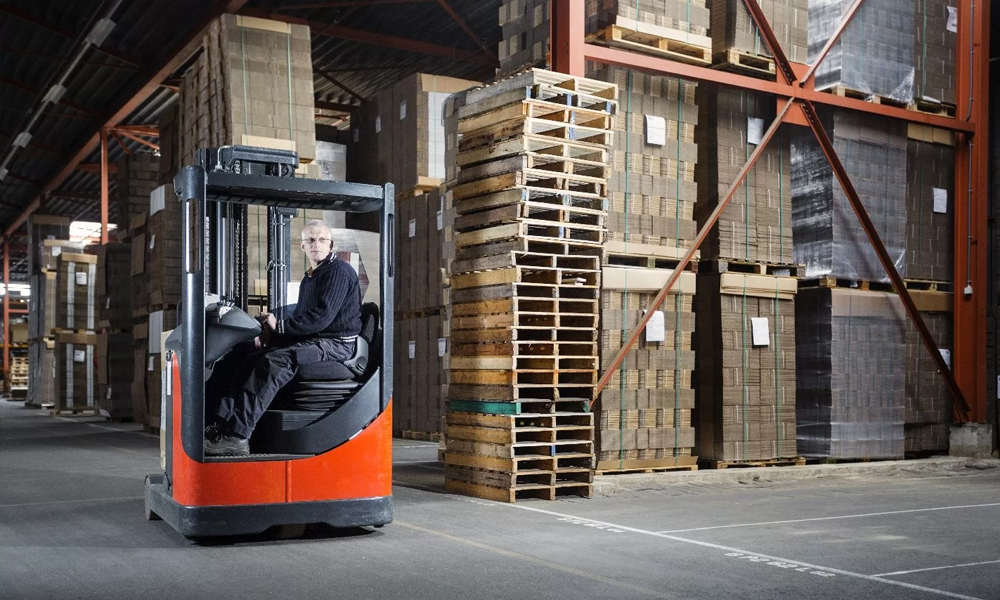
Not every order picker suits every warehouse, and getting the fit right comes down to a few honest questions rather than guesswork:
- How high does your racking actually go? The platform needs to comfortably reach every level you need, not just the average one.
- How narrow are your aisles, really? A machine that fits on a floor plan doesn’t always fit once shelving and signage are in place.
- How often is picking actually happening? A warehouse doing this dozens of times daily benefits from different features than one doing it occasionally.
There’s also the buy-versus-hire question, and it usually comes down to pattern rather than preference. A short-term hire tends to suit seasonal spikes or one-off projects well, while operations with steady, ongoing picking needs often find better long-term value exploring forklifts for sale outright, owning the machine that’s already proven itself on their floor.
The Space Above the Racking Was Always There
An order picker forklift doesn’t add new space to a warehouse. It just finally puts the space that was already there to work, the metres of racking sitting above head height, quietly holding stock nobody had an easy way to reach. For the right operation, tall shelving, tight aisles, frequent picking, that’s rarely a small win. It’s usually the difference between a warehouse that’s fighting its own layout and one that’s finally working with it.
That difference tends to compound over time too. A warehouse that closes the gap between its floor space and its vertical space isn’t just picking faster today; it’s building room to grow without needing to expand its footprint or renegotiate its lease. In an industry where warehouse space keeps getting more expensive, that’s not a small advantage. It might be the most valuable square metre a business already owns.
Frequently Asked Questions
A reach truck moves pallets with the operator at ground level. An order picker lifts the operator up to shelf height instead.
Yes, proper training and, in most cases, a relevant licence, since the job happens at height.
Mostly indoor. They’re built for smooth, flat warehouse floors, and the platforms and controls aren’t designed for the bumps and uneven ground a rough-terrain forklift is built to handle.
Many models are built or adapted specifically for cold storage, with sealed components and cold-rated batteries. It’s worth confirming this upfront, since a standard unit won’t necessarily hold up in sub-zero conditions.
Basic competency usually comes together within a few days of supervised practice, though genuine confidence at height, especially on high-level units, tends to build over the following weeks on the job.
Fall protection on the platform, controls built for use at height, and stability suited to your racking. Worth confirming directly with a supplier.
Some models offer a broader range, though a dedicated low-level or high-level unit usually performs better within its specific range.
At Heavylift Forklift, we help Melbourne businesses find the right equipment for the way they actually work, whether that’s a short-term hire or a forklift built to stay.