Managing a forklift fleet is no longer just about keeping machines running. Today, businesses are under pressure to improve safety, reduce operating costs, and get more value out of every piece of equipment. That is where forklift telematics comes in.
What Is Forklift Telematics?
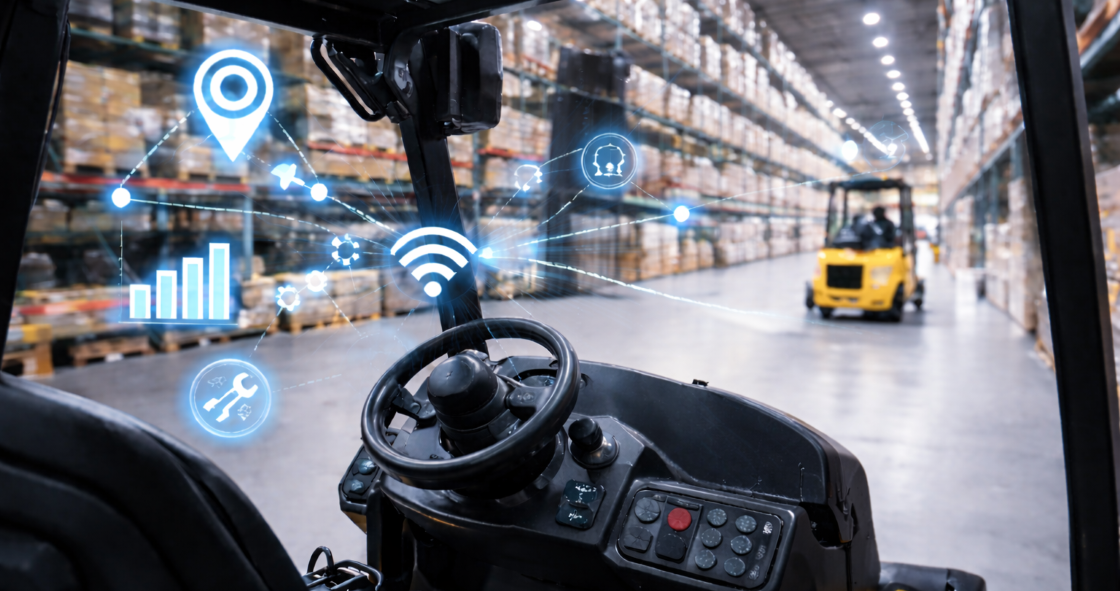
Forklift telematics is a system that uses technology to track, monitor, and report on how your forklifts are being used. It combines hardware fitted to the machine with software that turns raw data into clear, useful insights.
Instead of relying on manual checks or operator feedback, you get a clear picture of what is actually happening across your fleet. You can see which forklifts are being overused, which ones are sitting idle, and where potential issues are starting to develop.
It’s not just GPS tracking. While location tracking is one part of it, a full telematics system focuses on performance, safety, and maintenance. It helps you manage your forklifts as a complete operation, not just individual machines.
How Does Forklift Telematics Work?
Forklift telematics works by collecting data from each machine, sending it to a central system, and turning it into information you can actually use. While the technology behind it is advanced, the process itself is straightforward and happens in three main steps.
Data Collection
Each forklift is fitted with a small telematics device. This device connects to sensors on the machine and tracks key activity such as usage, operating hours and idle time, as well as impact detection to record knocks or collisions. For electric forklifts, the system can also track battery levels and charging patterns. Together, this builds a clear picture of how each machine is being used day to day.
Operator logins are another important part of data collection. Drivers may be required to enter a PIN, swipe a card, or use a key fob before starting the forklift. This links activity directly to a specific operator, helping improve accountability and safety across the site.
Data Transmission
Once the data is collected, it needs to be sent somewhere it can be accessed and reviewed.
Depending on the system, this happens through WiFi, cellular networks, or Bluetooth. Some setups send data in real time, allowing managers to see live updates as forklifts are being used. Others store the data on the device and sync it at set intervals, such as at the end of a shift or when the forklift returns to a coverage area.
The method used often depends on the work environment, site size, and how quickly the information needs to be available.
Data Analysis and Reporting
After the data is transmitted, it is processed and displayed through an online dashboard.
This is where the real value comes in. Managers can log in and quickly see how their fleet is performing, with access to reports on usage, impacts, maintenance needs, and operator activity.
Most systems also provide alerts, such as when a forklift is due for servicing, a battery is running low, or an impact has been detected. Instead of digging through spreadsheets, the information is presented in a clear and actionable way, making it easier to manage the entire fleet efficiently.

Key Features of Forklift Telematics Systems
Forklift telematics gives you clear visibility over how your equipment is used, maintained, and operated, helping you make better decisions across your fleet.
- Usage Tracking and Hour Meters
Tracks running time, idle time, and overall usage, so you can balance workloads and identify underused or overworked machines.
- Impact Detection and Damage Reporting
Records impacts and sudden movements, creating a reliable history of incidents and improving accountability.
- Maintenance Scheduling Alerts
Triggers service reminders based on actual usage, helping prevent breakdowns and keep forklifts running smoothly.
- Battery and Energy Monitoring (Electric Forklifts)
Monitors battery levels and charging patterns to reduce energy waste and extend battery life.
- Operator Performance Tracking
Links activity to individual operators, helping identify unsafe or inefficient behaviour and improve performance.
- Geofencing and Location Tracking
Tracks forklift location and sets boundaries, with alerts if equipment moves outside designated areas.
Also Read: What Licences and Training Do You Need to Operate a Hired Forklift?
Benefits of Forklift Telematics for Your Business
With the right data and features in place, forklift telematics starts to deliver real, measurable benefits. It is not just about tracking machines, it is about improving how your entire operation runs day to day.
Improved Safety
Telematics makes it easier to spot unsafe behaviour before it leads to a serious issue. You can monitor things like harsh braking, speeding, or impacts, and link these events back to individual operators. This creates a clear record of what is happening on site and allows you to address problems early through training or process changes. Over time, this leads to fewer incidents, a safer work environment, and better compliance with workplace safety requirements.
Lower Operating Costs
One of the biggest advantages of forklift telematics is the ability to identify inefficiencies. By tracking usage patterns, you can see where forklifts are idling for long periods or being used in ways that waste fuel or electricity. Small inefficiencies across multiple machines can quickly add up, so having visibility makes a real difference. With better insights, you can reduce unnecessary running time, lower energy consumption, and get more value from your existing fleet.
Better Maintenance and Less Downtime
Unexpected breakdowns can disrupt operations and lead to costly delays. Telematics helps you stay ahead of this by triggering maintenance alerts based on actual usage. Instead of reacting to problems, you can plan servicing at the right time and keep your forklifts in good working condition.
This reduces the risk of sudden failures and keeps your equipment available when you need it.
Increased Productivity
When you understand how your forklifts are being used, it becomes easier to improve overall efficiency. Telematics highlights which machines are doing most of the work and which ones are sitting idle. This allows you to balance workloads more effectively and avoid putting too much strain on a single forklift. The result is a more efficient fleet, better use of resources, and smoother day-to-day operations.
What Does Forklift Telematics Cost?
Forklift telematics usually involves a monthly subscription per machine, with some systems also requiring a small upfront setup. Costs vary depending on the features and provider, but in most cases it is an ongoing operational cost rather than a large upfront investment.
Is It Worth It?
For most businesses, telematics pays for itself by reducing damage, lowering energy or fuel use, and preventing breakdowns. Over time, the savings and efficiency gains usually outweigh the monthly cost.
Do New Forklifts Come with Telematics?
Most modern forklifts, including brands supplied by Heavy Lift Forklifts like Bobcat and Hangcha, are now telematics-ready. This means the hardware and capability to track data such as usage, hours, location, and performance is either already built into the machine or can be easily activated.
However, having the capability is not the same as having full access. In most cases, the telematics system itself runs on a software platform that requires a subscription. You may get basic tracking included or a short trial period, but features like detailed reporting, alerts, operator insights, and advanced analytics are usually part of an ongoing plan.
For buyers, this creates flexibility. You are not locked into using telematics, but the option is there if you want to take advantage of it. If your operation would benefit from better visibility and data, it can be activated and scaled as needed.
When purchasing through Heavy Lift Forklifts, the key is to treat telematics as an optional upgrade rather than a standard inclusion. It is worth discussing upfront what is available on the specific model, what is included, and what level of access you will have to the data. This way, you can choose a setup that matches your operation, whether you want a straightforward forklift or a more data-driven fleet.
Also Read: Common Forklift Problems Seen in Food Processing Facilities
Rentals and Telematics
When hiring a forklift, telematics is not always included as a standard feature, but the capability is often there.
At Heavy Lift Forklifts, we supply modern, reliable equipment, and many of our machines are telematics-ready. This means the hardware is in place or can be supported, depending on the model and application. For most standard hires, telematics is used internally to support servicing, maintenance, and overall fleet performance. This helps ensure every forklift you receive is well maintained and ready for the job.
If your operation requires more visibility, we can work with you to provide a more tailored setup. This may include:
- Supplying forklifts that support telematics systems
- Discussing available options based on your hire requirements
- Assisting with integration if you already use a telematics platform
For longer-term hire or larger fleet arrangements, there is greater flexibility to align the equipment with your operational needs. If forklift telematics is important to your business, let us know early in the process. We can help you choose the right machines and setup to match your requirements.
Optimise Your Forklift Fleet with the Right Setup
Whether you are looking to improve safety, reduce costs, or gain better visibility over your operations, the right forklift setup makes all the difference.
At Heavy Lift Forklifts, we supply reliable hire and sales options across Melbourne and Victoria, with flexible solutions to suit your business. From straightforward equipment to telematics-ready machines, our team can help you choose what works best for your operation.
Explore your options:
- Forklift hire in Melbourne
- New and used forklifts for sale
- Forklift servicing and maintenance plans
Speak with our team today to find the right forklift solution for your business.
Heavy Lift Forklifts
Our showroom: 826 Mountain Hwy, Bayswater VIC
Call us on: (03) 9762 4965