If you are buying, selling or considering forklift hire, one of the first questions you will hear is, “How many hours has it done?”
Forklift hour meters matter, but they do not tell the full story. Relying on hours alone can lead to poor purchasing decisions, incorrect valuations and unexpected repair costs. At Heavy Lift Forklifts in Melbourne, we regularly inspect machines where the real condition does not match what the hour meter suggests.
This guide explains how forklift hour meters work, why they can be misleading and what you should assess instead.
What Is a Forklift Hour Meter?
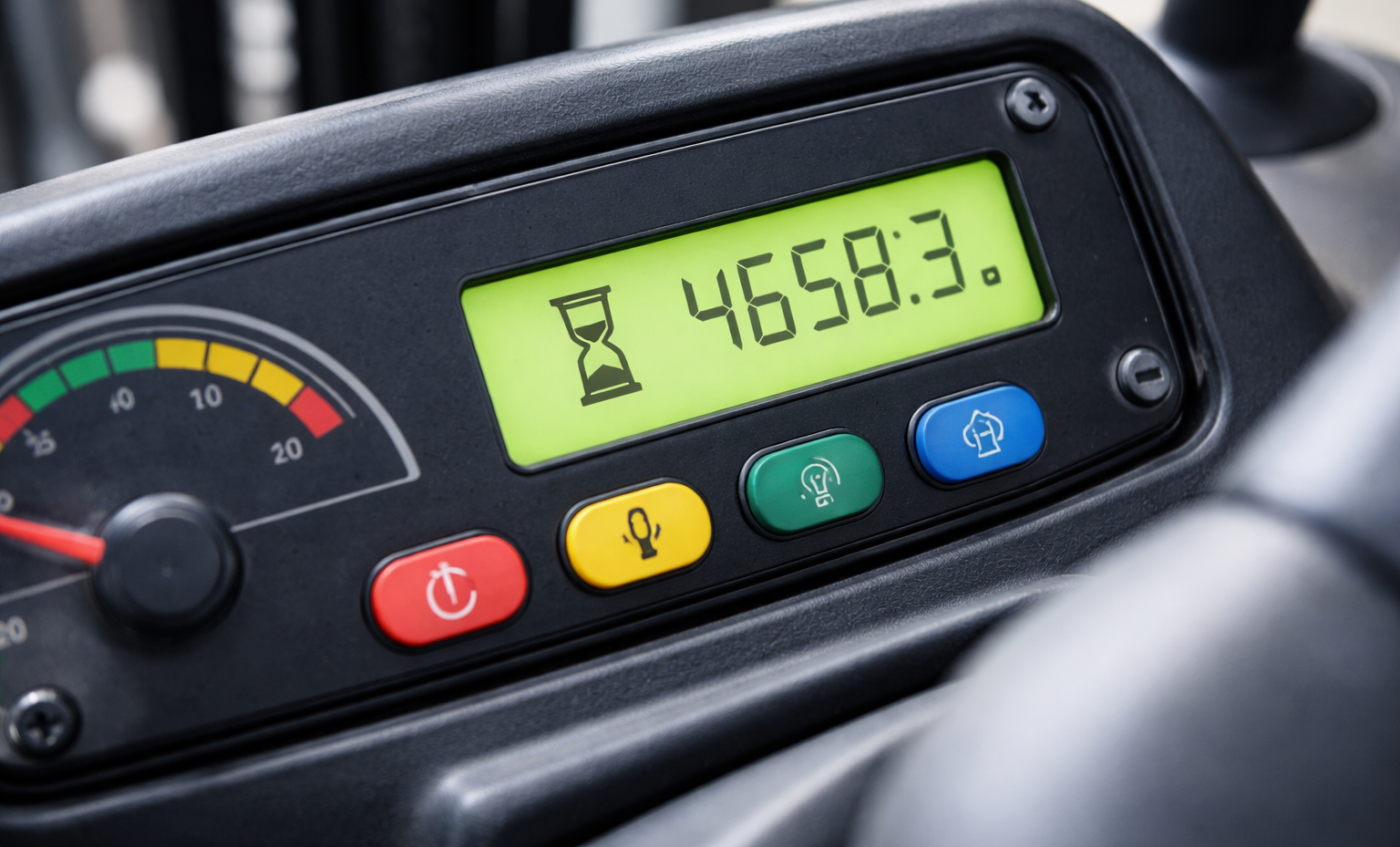
A forklift hour meter records the amount of time a machine has been operating. Unlike a car odometer, which measures distance travelled, a forklift measures operating time.
However, not all forklifts record hours the same way.
Key-On Hours
Some machines record time whenever the key is turned on, even if the forklift is idling. That means warm-up time, waiting at loading docks and break periods with the engine running all count towards total hours.
Engine-Running Hours
Most LPG and diesel forklifts record time only while the engine is running. This is more accurate than key-on time, but it still does not reflect how hard the machine has been working.
Traction or Work Hours
Many modern electric forklifts separate key-on time from drive motor hours. Traction hours give a better picture of actual usage, particularly in busy warehouse environments.
Also Read: How to Clean a Forklift
How Forklift Hour Meters Work
Hour meters are typically integrated into the dashboard display. On newer electric models, such as those used in warehouse operations, the display may show multiple usage metrics including total hours, drive hours and lift cycles.
On older LPG or diesel units, the hour meter is often a simple analogue or digital counter that increases whenever the engine runs.
The key takeaway is that hours measure time, not workload intensity.

Why Forklift Hours Alone Can Be Misleading
1. Light Use vs Heavy Use
Two forklifts can both show 5,000 hours, yet be in completely different condition.
A machine used for light pallet movement on smooth concrete will wear very differently compared to continuous heavy lifting near maximum rated capacity.
High-load applications place more stress on the transmission, mast channels, lift chains and hydraulics. Hours do not capture this intensity.
If you are comparing used machines for forklift sales in Melbourne, always consider the application the forklift was used for.
2. Operating Environment Makes a Big Difference
A forklift operating indoors in a clean warehouse will typically experience less wear than one working outdoors in:
- Recycling facilities
- Construction sites
- Timber yards
- Dust-heavy environments
Dust, moisture and uneven terrain accelerate wear on bearings, steering components, cooling systems and electrics.
3. Maintenance History Matters More Than Hours
A properly serviced forklift with 8,000 hours can be far more reliable than a poorly maintained machine with 3,000 hours.
Always check:
- Service records
- Hydraulic oil change intervals
- Transmission servicing
- Cooling system maintenance
- Brake inspections
- Battery maintenance logs for electric forklifts
When assessing used units at Heavy Lift Forklifts, we prioritise mechanical inspection and service history over the raw hour figure.
If you are considering a unit, speak to our team to review available models and service backgrounds.
4. Electric vs LPG vs Diesel Hours Are Not Equal
Electric forklifts generally:
- Have fewer moving parts
- Experience less vibration
- Produce less heat stress
This means higher hour counts can still represent solid value if the battery has been maintained correctly.
LPG and diesel forklifts:
- Experience engine wear
- Have fuel system components
- Operate at higher temperatures
Therefore, 6,000 hours on an electric forklift is not directly comparable to 6,000 hours on a diesel unit.
If you are unsure which fuel type suits your operation, review our forklift hire options for flexible short and long term solutions, and contact our team for an expert opinion.
What Is Considered High Hours on a Forklift?
There is no universal rule, but as a general guide:
- 0 to 3,000 hours: Low
- 3,000 to 7,000 hours: Moderate
- 7,000 to 12,000 hours: High
- 12,000+ hours: Very high
However, many well-maintained forklifts operate reliably beyond 15,000 hours. Proper servicing and application suitability matter more than the number itself.
Also Read: Hydraulic System Health Checks for Non-Mechanics
What to Inspect Beyond the Hour Meter
When evaluating a forklift, inspect:
Mast and Carriage
- Side play in the carriage
- Lift chain stretch
- Wear on mast channels
Hydraulics
- Oil leaks
- Slow or jerky lift movement
- Noisy hydraulic pump
Transmission
- Smooth forward and reverse engagement
- No slipping under load
Steering and Axles
- Excessive movement
- Uneven tyre wear
Battery Condition (Electric)
- Battery age
- Watering history
- Voltage balance
If you are unsure what to look for, our mobile technicians can assist with forklift servicing and maintenance in Melbourne and Victoria.

When to Compare Based on Hours
Hour meters are still valuable when used correctly. They help:
- Track maintenance intervals
- Compare similar machines in similar environments
- Estimate component replacement cycles
- Assess hire utilisation
In fleet management, hours are an important metric, but they should always be interpreted alongside condition and service records.
At Heavy Lift Forklifts, we assess the complete picture before recommending a machine. Whether you are exploring forklift hire in Melbourne, purchasing a used unit or organising servicing, our team can guide you through a proper evaluation process.
Contact us today to discuss your requirements and ensure you choose equipment based on condition and suitability, not just the hour meter reading.
Heavy Lift Forklifts
Our showroom: 826 Mountain Hwy, Bayswater VIC
Call us on: (03) 9762 4965