Agricultural Forklift Trends: Werribee South, Yarra Valley and Mornington Peninsula
Victoria’s agricultural regions are becoming increasingly mechanised, with forklifts and telehandlers now playing a central role in day to day farm operations. From intensive market gardens in Werribee South to vineyards throughout the Yarra Valley and mixed farming enterprises across the Mornington Peninsula, demand is shifting towards more versatile, terrain-capable and cost-efficient lifting equipment.

As farms modernise and scale operations, material handling efficiency, safety and flexibility are now key decision drivers when selecting agricultural forklifts and telehandlers.
Growing importance of forklifts on farms and agricultural sites
Farmers and producers across Victoria increasingly rely on forklifts and telehandlers to move produce, handle pallets, load trucks and manage bulk materials during harvest and processing periods. In horticultural regions such as Werribee South and the Yarra Valley, the ability to move delicate produce quickly and safely from field to cool room or transport vehicle is critical.
This has driven strong demand for smooth-operating, adaptable machines that reduce manual handling while maintaining consistent throughput during peak seasons.
Telehandlers, also known as telescopic handlers, are particularly favoured in agricultural environments. Their extendable boom allows operators to reach into high-sided trailers, stack loads at height and work in awkward spaces without requiring multiple machines or additional lifting equipment. This makes them especially valuable in vineyard settings and packing sheds where space, height and access vary.
Broader Australian forklift market trends influencing local farming
Across Australia, including Victoria, the forklift market continues to evolve with a clear move towards advanced, versatile and more sustainable equipment.
Electric forklifts are gaining traction due to lower operating costs and reduced emissions, particularly in environments such as packing sheds, cool rooms and enclosed storage areas close to farms.
Automation and smart technologies, including telematics, sensors and usage tracking systems, are increasingly available on modern machines. These features help agricultural operators monitor utilisation, maintenance schedules and fuel or battery efficiency, which is especially beneficial on larger properties across the Mornington Peninsula and Yarra Valley where fleets may be in frequent use.
Rough terrain forklifts and specialised outdoor units are also becoming more common on farms and rural sites. Their ability to operate safely on uneven ground makes them far more practical than traditional warehouse forklifts across mixed terrain found throughout Victoria’s farming zones.
Also Read: Common Forklift Problems Seen in Food Processing Facilities
Regulatory and safety considerations in Victoria
Forklift operation on farms and agricultural sites in Victoria is subject to workplace safety requirements. Operators must be appropriately trained, and risks need to be actively managed, particularly where forklifts operate alongside people, vehicles and other plant equipment.
During peak harvest and vintage periods, farms often run multiple machines simultaneously. This makes proper training, maintenance and site-specific safety procedures essential to reducing incidents and downtime.

Demand drivers specific to regional agricultural conditions
- Werribee South
Werribee South is known for intensive market gardening and high-volume vegetable production. Farms in this area require agile forklifts capable of handling crates, pallets and bulk inputs such as fertiliser or soil without damaging produce. Short-term forklift hire during harvest peaks is common to manage fluctuating workloads.
- Yarra Valley
Vineyards and boutique producers in the Yarra Valley benefit from forklifts and telehandlers that can access sheds and trailers while minimising ground impact. Compact telehandlers and rough terrain forklifts are especially popular where vineyard terrain varies and access is limited.
- Mornington Peninsula
The Mornington Peninsula supports a diverse mix of agriculture and agritourism operations. Many businesses require equipment that can perform multiple roles across the year, driving interest in multi-purpose machines and flexible hire options to support seasonal peaks.
Equipment selection trends for farming applications
When choosing forklifts and telehandlers, farmers are balancing cost, versatility and sustainability. Electric forklifts are increasingly used where emissions and noise matter, such as indoor sheds. Diesel and LPG forklifts remain common for outdoor and heavy-duty tasks.
Telehandlers and rough terrain forklifts continue to be strong choices for farms requiring reach, lifting height and reliable outdoor performance.
Machine types and what they are best suited for:
- Telehandlers (telescopic handlers)
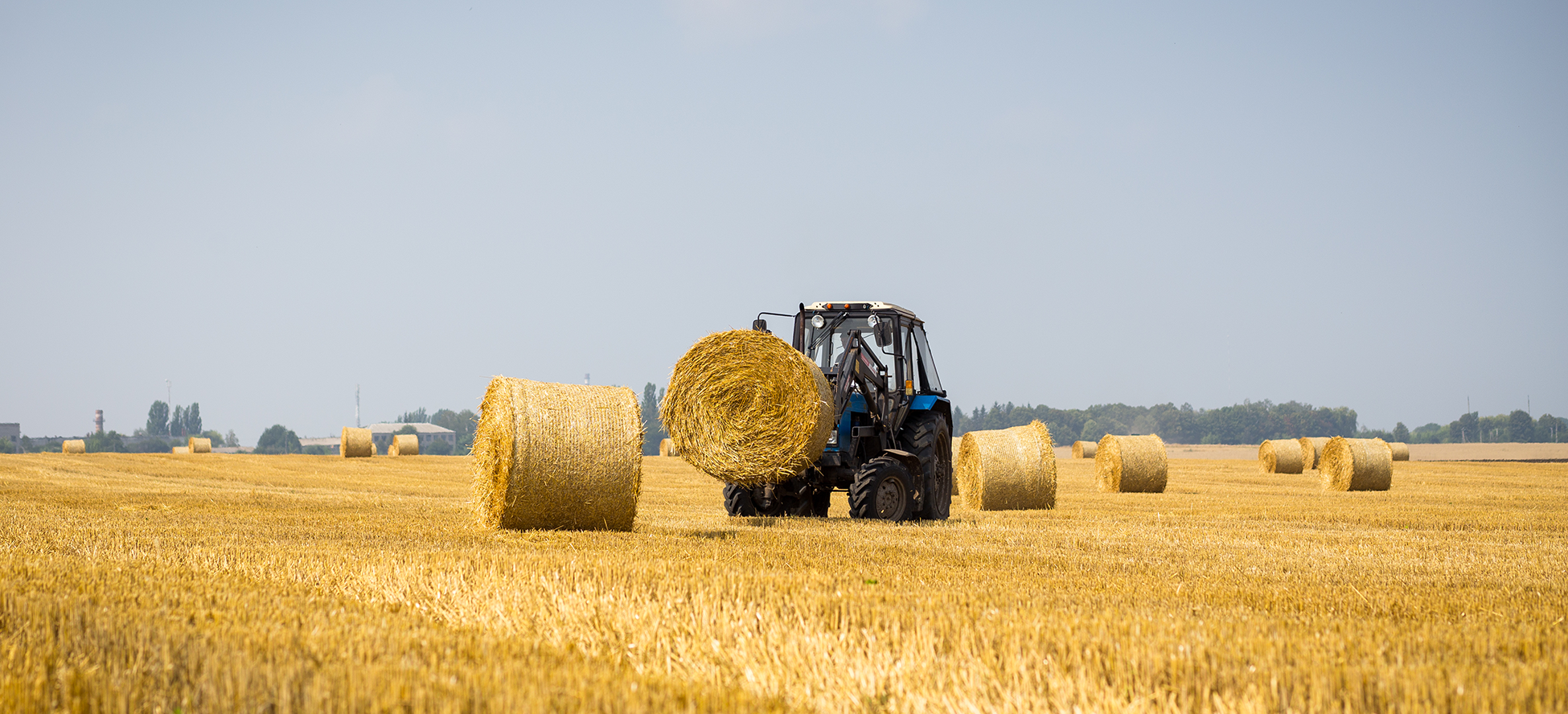
Highly versatile machines combining lifting height and forward reach. Common agricultural uses include stacking pallets in sheds, loading high-sided trailers, moving hay bales or fertiliser and working safely across uneven paddocks. In many cases, they replace the need for both a forklift and a crane.
- Compact telehandlers
Smaller and easier to manoeuvre in confined spaces. Well suited to nurseries, greenhouses, orchards and smaller farm buildings.
- Fixed-boom telehandlers
Strong and stable machines designed for agricultural work where rotational movement is not required, but reliable lift capacity and reach are essential.
- Rough terrain forklifts
Traditional forklifts fitted with large tyres and four-wheel drive. Designed to operate on dirt, gravel and uneven ground, making them ideal for paddocks and outdoor farm environments.
- Standard forklifts (counterbalance or electric)
Best suited to yard and shed work on flat surfaces. Commonly used for moving pallets, bins and crates, with electric units preferred for quieter and cleaner indoor operation.
Rental and hire trends in Australia
Forklift hire and telehandler hire remains popular for seasonal agricultural work such as harvest and packing periods.
Typical hire rate ranges, as a general guide, include:
- 2.5 tonne LPG counterbalance forklift: approximately $150 to $180 per day or $500 to $700 per week ex GST
- 2.5 tonne electric forklift: approximately $180 to $220 per day or $600 to $750 per week ex GST
- 3.5 tonne diesel forklift: approximately $220 to $250 per day or $700 to $900 per week ex GST
- Telehandlers between 6 and 12 metres: approximately $300 to $500 plus per day or $1,000 to $1,800 plus per week ex GST
—
*Rates are average for industry and are accurate at the time of publishing. Prices vary depending on machine size, duration and availability. For accurate pricing on forklift hire in Melbourne and across Victoria, call (03) 9762 4965.
Wet hire options, where an operator is included, are typically higher than dry hire. Telehandler wet hire rates may range from approximately $140 to $180 plus per hour, while dry hire may range from approximately $60 to $100 per hour depending on machine size. Please contact an experienced supplier for current rates.
Also Read: Planning a Warehouse Move? Here’s How Renting a Forklift Can Save the Day
Purchase and ownership considerations
Purchasing forklifts or telehandlers is often more suitable for farms with consistent year-round usage. Indicative telehandler purchase ranges include:
- Entry-level models with smaller reach from around $80,000 plus
- Mid-range agricultural units from approximately $110,000 to $180,000
- Heavy-duty or high-reach machines from $190,000 plus
- Used telehandlers are often available between $45,000 and $90,000 depending on age, hours and condition
Ownership also allows farms to invest in attachments such as buckets, bale clamps and work platforms to increase machine versatility.
Hire versus buy considerations
- Seasonal or short-term work
Hiring avoids large upfront costs and provides access to newer or more capable machines when needed.
- Frequent or long-term use
Purchasing equipment is often more cost-effective and ensures availability during peak periods.
- Cash flow and maintenance
Hire arrangements typically include servicing and reduce maintenance obligations, while owned machines require ongoing upkeep and storage planning.
Practical tips for farm operators
- For Werribee South vegetable growers and market gardens with seasonal peaks, hiring forklifts or telehandlers during harvest periods can significantly reduce idle equipment costs.
- In Yarra Valley vineyards and orchards, compact telehandlers and rough terrain forklifts provide access across uneven blocks while maintaining manoeuvrability in tight spaces.
- On mixed farms across the Mornington Peninsula, a hybrid approach of owning a reliable mid-range machine and hiring additional equipment during peak workloads can balance flexibility and cost control.
How Heavy Lift Forklifts supports Victorian agriculture
Heavy Lift Forklifts works closely with agricultural businesses across Victoria to supply forklifts (SALE and HIRE) and telehandlers suited to real farm conditions. From short-term hire for harvest season to long-term equipment solutions, our team understands the operational demands of horticulture, viticulture and mixed farming. Support includes:
- Forklift and telehandler hire
- Sales of new and used agricultural equipment
- Advice on machine selection based on terrain and workload
- Flexible solutions to manage seasonal demand
Conclusion
Agricultural forklift trends in Victoria are moving towards greater versatility, efficiency and smarter equipment strategies. As farms continue to modernise, forklifts and telehandlers will remain critical tools for improving productivity across Werribee South, the Yarra Valley and the Mornington Peninsula.
Selecting the right machine, along with the right hire or ownership approach, allows agricultural operators to meet seasonal demand while controlling costs and improving safety across their operations.
Heavy Lift Forklifts
Our showroom: 826 Mountain Hwy, Bayswater VIC
Call us on: (03) 9762 4965