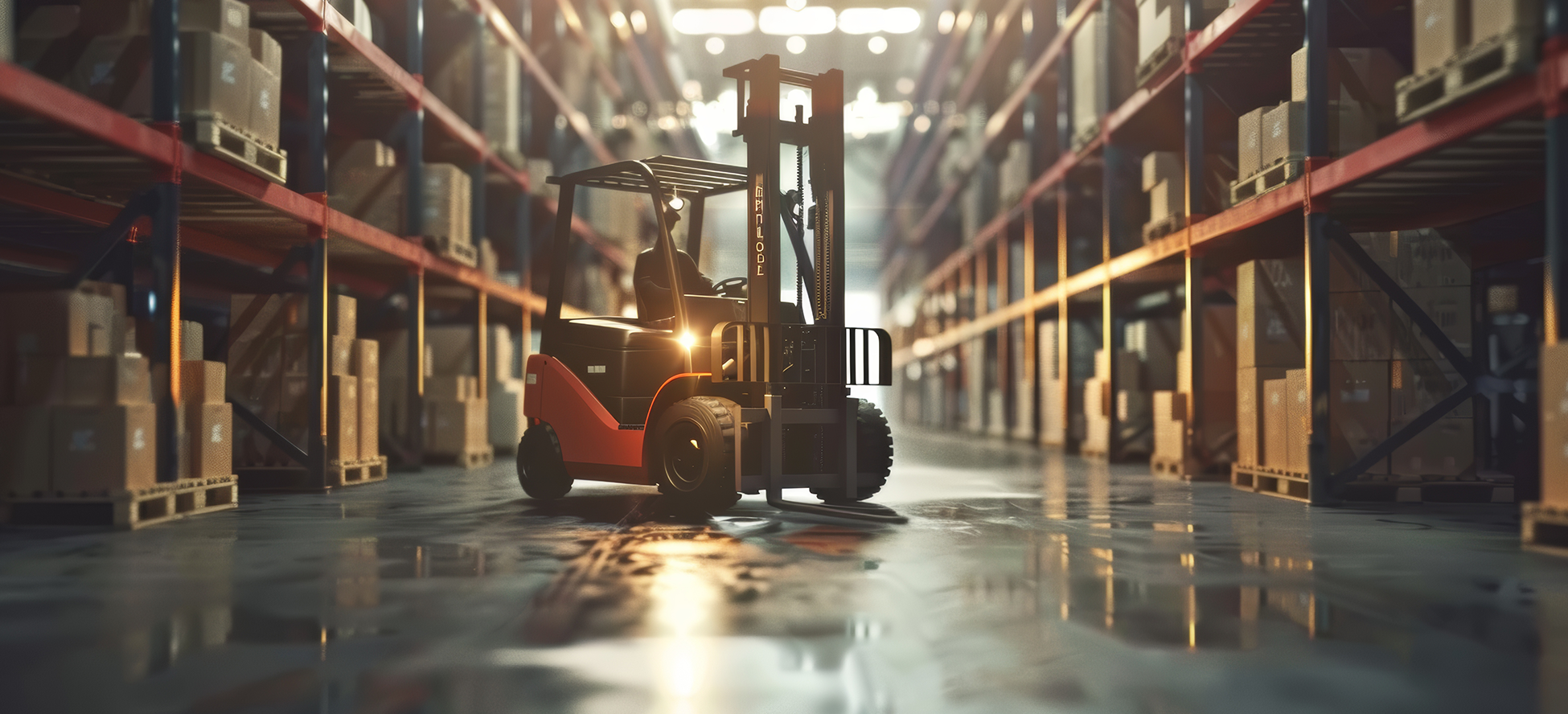
Choosing the right mast is one of the most important decisions when selecting a forklift. The mast determines how high you can lift, how much clearance you need, and how safely your operators can work in your warehouse. Below, we break down the main mast types — 2-stage, 3-stage and quad — so you can match the right setup to your lifting needs.

What Is a Forklift Mast?
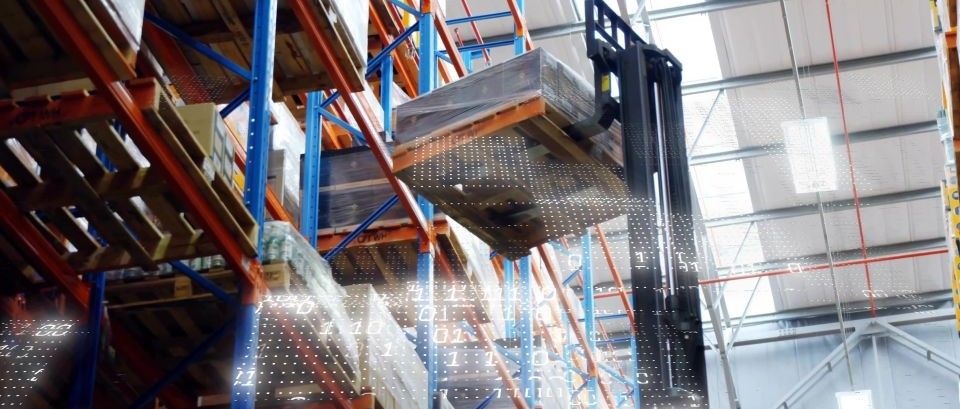
The mast is the vertical assembly at the front of the forklift that raises and lowers the forks. It uses interlocking rail sections, hydraulic cylinders and chains to move the load smoothly and safely.
A common question operators ask is: Do different mast types affect the forklift’s lifting capacity?
Yes — your lifting capacity reduces as the mast goes higher, which is known as residual capacity. Always check the load chart to confirm safe lifting at height.
2-Stage Mast (Duplex Mast)
A 2-stage mast has two sections: a fixed outer frame and an inner section that lifts. This design is simple, strong and ideal for applications where lift height is moderate.
- Best suited for: loading docks, outdoor yards, low-to-mid racking
- Typical lift height: 3.0 m to 4.5 m
- Advantages:
- Strong and stable
- Better forward visibility
- Fewer moving parts, which means less maintenance
- More cost-effective than taller mast configurations
A common question here is: Is a 2-stage mast enough for warehouse use?
It can be — but only if your racking isn’t too high and you don’t need to work in tight, low-clearance areas like containers. For most modern indoor warehouses, a 3-stage mast is more versatile.
Also Read: Forklift Load Centre Distance Explained: What It Is and Why It Matters
3-Stage Mast (Triplex Mast)
A 3-stage mast features three lift sections and usually includes free lift, which allows the forks to rise without the mast extending. This is ideal for low-ceiling areas such as containers and trucks.
- Best suited for: warehouses, containers, indoor sites with height limits
- Typical lift height: 4.5 m to 6.5 m or more
- Advantages:
- Excellent vertical reach
- Fits under low ceilings and roller doors
- Ideal for high racking
- Great all-round versatility
A frequent question operators ask is: What is free lift and why does it matter?
Free lift lets you raise the forks without the mast extending upward. This prevents the mast from hitting ceilings or container roofs, making this mast type safer in restricted spaces.
Another common question: Which mast type is most popular?
The 3-stage mast is by far the most common because it suits most warehouse layouts and lifting jobs.
Quad Mast (Four-Stage Mast)
A quad mast has four sections that collapse tightly but can extend to extreme heights. This configuration is used in specialised environments where very tall racking is standard.
- Best suited for: high-bay warehousing, distribution centres, bulky stockrooms
- Typical lift height: 8.0 m to 12.0 m+
- Advantages:
- Maximum lift height
- Allows tall stacking even with low entry clearance
- Useful when storing pallets several levels above standard racking heights
A common question is: Is a quad mast worth the extra cost?
Only if you genuinely need the extra height. For typical warehouses, a 3-stage mast provides more than enough reach without the additional complexity and cost of a quad.
Another question operators ask: Why is visibility reduced with a quad mast?
Because of the extra rail sections. More rails mean more material in the operator’s line of sight, especially when travelling with the forks lowered.
Also Read: Clamp, Jib or Rotator? Which Attachment to Choose?
Choosing the Right Mast for Your Site
When deciding on the right mast type, consider:
- Warehouse ceiling and door clearance
- Maximum racking height
- Pallet weight at full lift height
- Whether you work inside containers or low-clearance spaces
- How often high lifts are required
A common question is: Can I replace the mast later if my needs change?
Sometimes, yes — but not always. Masts must match the forklift’s hydraulic system and structural limits. Always check with a qualified technician before considering a mast changeover.
Common Mistakes to Avoid
- Choosing a mast based only on maximum lift height
- Underestimating visibility issues for operators
- Ignoring residual capacity at higher lift points
- Buying a quad mast when your site doesn’t require extreme lift
Understanding the differences between 2-stage, 3-stage and quad masts helps you choose a forklift that’s safe, efficient and suited to your warehouse layout.
If you need help selecting the right mast, our team can compare lift heights, clearance needs and load capacities to match the best machine to your operation.
Heavy Lift Forklifts
Our showroom: 826 Mountain Hwy, Bayswater VIC
Call us on: (03) 9762 4965