Two businesses can buy what looks like the same forklift, from the same dealer, in the same month, and end up with completely different outcomes five years later.
One machine earns its keep quietly, shift after shift.
The other becomes a running joke around the warehouse, always in the workshop, never quite right for the job it was bought to do.
The difference almost never comes down to luck. It comes down to a handful of decisions made before the purchase was even signed.
What to consider when buying a forklift comes down to more than comparing prices. You need to match the machine to the job, choose the right power source, weigh new against used, understand the real ownership cost, and stay compliant with Australian safety requirements.
As a family-owned Melbourne dealer since 2003, with more than 30 years in the industry, we have watched both outcomes play out more times than we can count, and we know which decisions predict which one you will get.
Forklift Buying Guide: Start With Your Application
Here is where most buyers go wrong before they have even opened a brochure: they start comparing brands instead of getting honest about the job the forklift needs to do.
Load capacity – Spec for your heaviest load, not your average one. If your business usually lifts 1.8 tonnes but occasionally manages 2.5 tonnes, buy for the 2.5-tonne day. Load centre also matters because long or off-centre loads reduce real lifting capacity.
Lift height – Match the mast to your tallest rack beam. Also check the mast’s collapsed height against doorways, containers, and low clearance areas. Two stage masts suit lower ceilings, while three-stage or container masts suit taller racking.
Operating environment – Indoor, outdoor, or mixed-use changes almost everything, including surface type, ramps, and dock plates, and it also determines tyre choice (see our guide on solid vs pneumatic tyres for more on that).
Aisle width – This decides whether a counterbalance forklift, reach truck, or narrow-aisle equipment suits your site. Measure your aisles before you shop, not after.
Also Read: 5 Benefits Of An Electric Forklift
How to Choose a Forklift Power Source
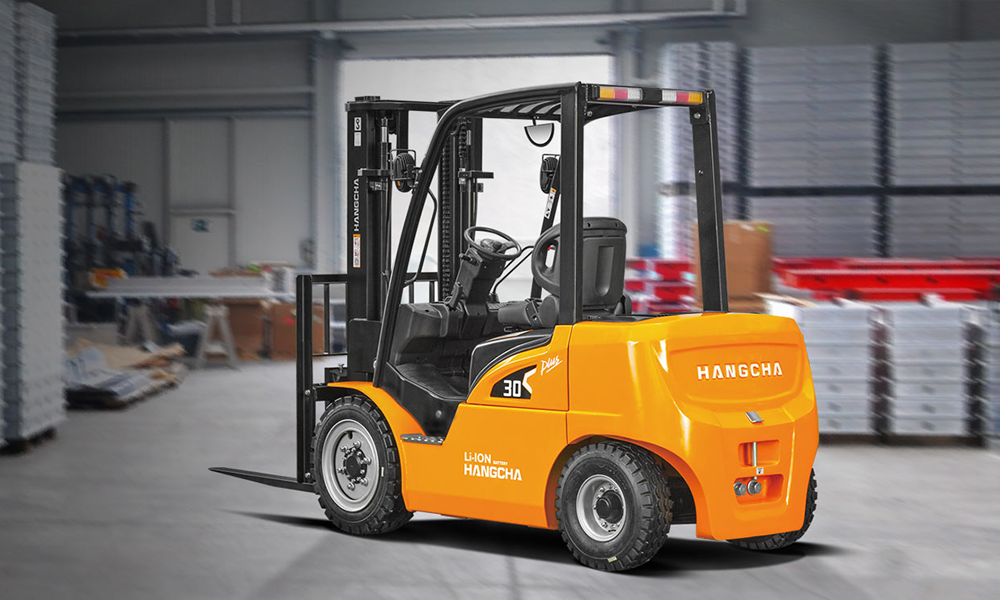
Where the forklift spends 80% of its working day should decide the power source.
- Electric — runs quiet, zero emissions, cheapest to run day to day, the natural choice for indoor work. Lithium-ion batteries manage multiple shifts and quick top-ups more easily than lead-acid, which suits steady, single-shift use instead.
- LPG — genuine indoor and outdoor versatility with proper ventilation, plus fast bottle swaps that avoid downtime. A favourite for Australian businesses running mixed environments.
- Diesel — the grunt for outdoor work, long shifts, towing, and rough ground, where power and range matter more than quiet operation.
New vs Used Forklift: Which Should You Buy?
This is the question that trips up more buyers than any other, and it is rarely about which option is objectively better. It comes down to your hours and your capital.
New vs used forklift comparison: indicative Australian buying considerations.
| Factor | New | Used |
| Upfront cost (indicative AUD) | ~$20k–$45k+ | ~$5k–$50k |
| Warranty | Full manufacturer warranty | Limited or dealer-backed only |
| Lead time | Can involve order wait times | Available immediately |
| Remaining working life | Full working life ahead | Depends on hours and condition |
| Technology and safety features | Latest available | Varies by age and model |
| Depreciation | Steepest in year one | Already absorbed by prior owner |
New tends to win for multi-shift daily use, a long ownership horizon, a specific spec or attachment requirement, the latest safety technology, or where finance makes the higher upfront cost manageable. Browse our current new forklifts for sale to see what is available.
Used tends to win for light or intermittent use, under roughly 15–20 hours a week, tight capital, a backup unit, or standard specifications without specific requirements. Our used forklifts range is worth a look here.
For used units, check the service history against the hour meter, inspect tyres and forks, test mast operation, and review battery health on electrics. Buy from a dealer that safety-checks and warrants the unit, not from an as-is auction listing.
Look Past the Price Tag: Total Cost of Ownership
The purchase price is only part of the story. Fuel or charging costs, servicing, spare parts, tyres, downtime risk, and resale value all affect the total cost of ownership.
A cheap import with no local parts support can cost more by year three than a dearer machine backed by a proper dealer network. Look for mobile servicing, spare parts availability, and loan-unit support before you buy.
Australian Compliance and Safety Requirements
Australian buyers should check four basics before handover: operators need an LF class High Risk Work Licence, the forklift must have a legible data or capacity plate, attachments should be reflected in any derating, and compliance documentation should be supplied.
Units should comply with AS 2359, and WHS duties mean pre-start checks and maintenance records matter from day one. Always confirm current WorkSafe or SafeWork requirements for your state.
Also Read: What is Forklift Pre-start Checklist?
Forklift Buying Tips: 7 Quick Checks Before You Sign
- Spec for your heaviest load and highest beam, not the average.
- Measure your aisles and door heights before you shop.
- Match the power source to where the forklift works 80% of the time.
- Demo the machine on your own site, or at least a like-for-like surface.
- Get the service history and hour meter verified on any used unit.
- Price the service plan, parts, and tyres before comparing purchase prices alone.
- Confirm the data plate, compliance documents, and warranty in writing.
Buy, or Hire First? Forklift Sales in Melbourne
If your utilisation is uncertain, consider hiring first. A short or long-term forklift hire lets real usage data decide the right spec before you commit capital.
Heavy Lift Forklifts customers can trial a configuration on hire, then buy new or used with more confidence. We sell new and used forklifts for sale in Melbourne, backed by mobile servicing across Victoria, in-house spare parts, and practical advice on whether new, used, or hire suits your operation.
FAQs
As a guide, at the time of writing, new forklifts typically range from around $20k to $45k or more depending on capacity and power source, while quality used units commonly sell for $5k to $50k.
It depends largely on your weekly hours and available capital. Heavy, ongoing use favours new; lighter or occasional use often favours used.
No licence is required to purchase one, but operators do need an LF High Risk Work Licence to legally drive it.
Typical working life sits around 10,000 to 15,000 hours, though condition and documented service history matter more than the raw hour count alone.
Conclusion
Buying a forklift comes down to three things: match the machine to the job, weigh new vs used against your hours and capital, and buy the support network, not just the machine.
Bring us your load, racking, and site details, and we will help you choose the right spec the first time.